Historical context
Film History
The periods, technology and industry conditions behind the titles in our catalogue — dated, sourced, and kept separate from opinion.
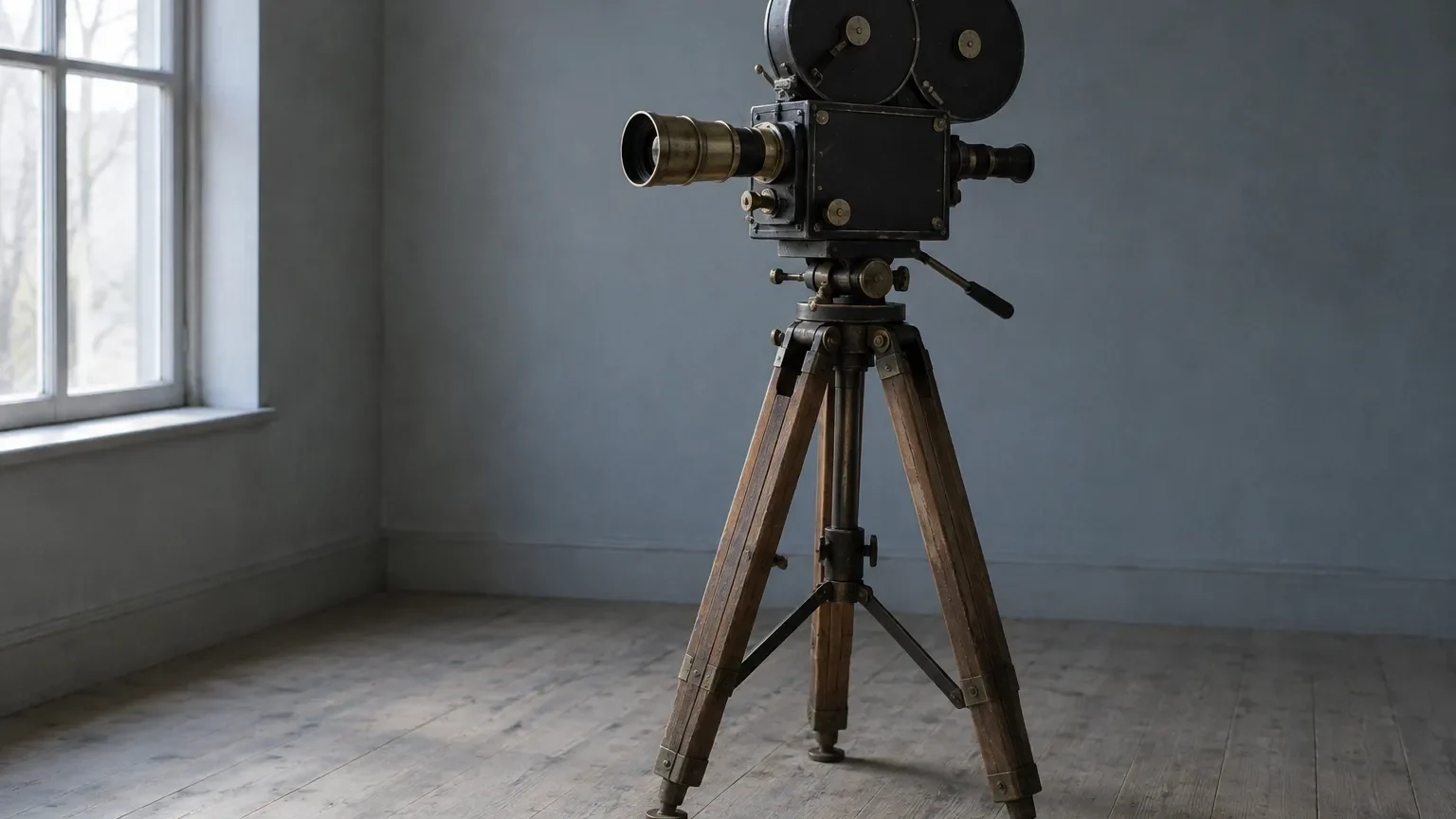
The context we attach to a film we cover
A historical note on Plot & Cast is not a mood board. Each one does a specific job on the film page it sits beside.
-
Movement and period primers
-
Technology and format notes
-
Industry and funding conditions
-
Australian production context
Periods that explain the films we review
Dates here are conventional markers used by film scholars, not moments when everything changed overnight.
-
1895–1915
Cinema learns to tell a story
-
1920s
Sets and light built to express
-
1945–1955
Streets instead of studios
-
1959–1964
Cameras get lighter and leave the lot
-
1970s onward
Australian filmmaking rebuilds
Why the date on a film changes how you read it
A plot is a sequence of decisions, and most of those decisions were constrained by what was technically possible, legally permitted and affordable at the time. A film that holds a shot for two minutes because the camera could not easily move is making a different proposition to one that holds the same shot as a deliberate choice. Without the date, a viewer reads the first as the second.
The history entries on this site separate what is documented from what we argue. Facts are stated plainly — a release year, a funding body, a technical process entering production, a classification outcome — and each sits beside a source note. Interpretation begins after a horizontal rule or an explicit label, and it is written as our reading of the evidence, never as a claim about what a director secretly intended. Where we cannot verify a detail, it is omitted, not softened into vagueness.
This matters most for Australian titles, where the production record is well documented but thinly repeated outside specialist writing. We would rather say less about a film's financing than repeat a version of events that no source supports. The same discipline governs spoilers: a history note never reveals an ending to explain a period, and anything that touches a twist sits behind a click-through warning.
Where the sourcing rules are written down
The standards behind these entries are published rather than implied.
-
Editorial policy and corrections How interpretation is labelled, and the commitment to correct a factual error within two business days, with a public log of what changed.
-
Source-note standard Two independent sources for a factual claim, and omission where those sources disagree without resolution.
-
Cast Score methodology The ten-point editorial rating across story, acting, direction, writing and technical craft, published in full with its criteria.
-
Copyright and image enquiries How to raise a question about a poster, a still or quoted material, with a five business day response commitment.
-
Content removal requests A dedicated form for removal requests, answered within fourteen days under the Australian Privacy Principles.
Questions about the film history entries
Is a history note the same as a review?
No. A history note deals in dates, production conditions and documented technique; a review or plot analysis deals in what the film means and how well it works. On every film page the two are kept apart with a rule and a label, so you can read the record without taking on the argument.
Do the entries ever spoil a film to explain its period?
They are written not to. A period can be explained without naming an ending, and where a historical point genuinely depends on a late development in the plot, it is moved into the expandable section behind a spoiler warning. The 200-word summary at the top of every film page stays spoiler-free.
Which films get historical context?
Every title where the context is documented well enough to be useful. The Australian selection, fifteen films spanning 1906 to 2023, carries the heaviest context because the local production record rewards it. Elsewhere a film may have only a short technology note, or none at all.
What happens if a date or a source turns out to be wrong?
It is corrected and logged. We publish the date, the original error and the corrected information, and corrections are flagged in the newsletter's Corrections and Clarifications section so readers who saw the earlier version know it changed.